
AgriTech Undergraduate Scholarship Programme for Nigerian Students: Complete Guide to Full Funding Opportunities

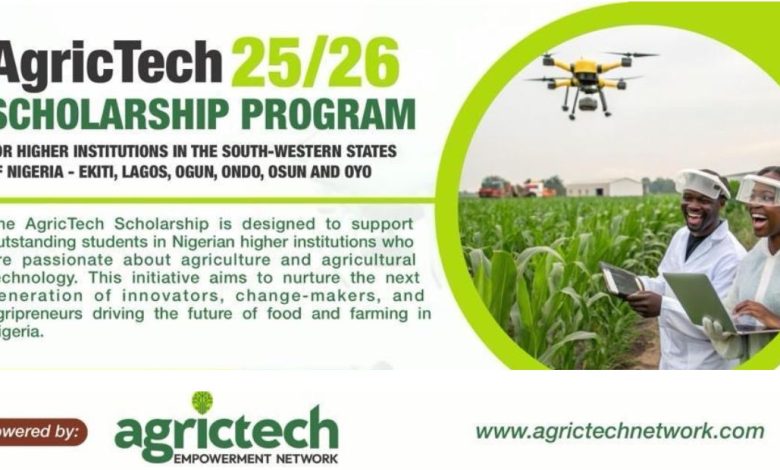
Discover the AgriTech Undergraduate Scholarship Programme offering full funding for Nigerian students. Complete guide to eligibility, application process, benefits, and career opportunities in agricultural technology education.
AgriTech Undergraduate Scholarship Programme for Nigerian Students 2026/2027
The agricultural technology sector in Nigeria stands at a critical juncture, with millions of young people seeking pathways into careers that can transform food security and rural development across the nation. For ambitious Nigerian students passionate about merging agriculture with cutting-edge technology, the AgriTech Undergraduate Scholarship Programme represents a gateway to achieving educational dreams without the burden of financial constraints.
This comprehensive scholarship initiative addresses the pressing need for skilled professionals in agricultural innovation, precision farming, and sustainable food systems.
Understanding the application process, eligibility requirements, and benefits of this programme can position qualified candidates for success in securing full funding for their undergraduate studies.
Read Also: ANSO Scholarship in China 2026: Fully Funded Masters & PhD Programs (How to Apply)
Overview of the AgriTech Scholarship Initiative
The scholarship programme exists specifically to nurture the next generation of agricultural technology leaders in Nigeria. Unlike conventional agricultural education support, this initiative focuses on students who demonstrate genuine interest in leveraging technology to solve agricultural challenges facing Nigerian communities and the broader African continent.
Agricultural technology encompasses various disciplines including precision farming, agricultural data analytics, farm management systems, biotechnology applications in crop production, and supply chain optimization through digital platforms. Students pursuing these fields often face substantial financial barriers that prevent them from accessing quality education despite having the aptitude and passion necessary for success.
Full funding scholarships remove these economic obstacles entirely. Recipients gain access to tuition coverage, accommodation support, learning materials, and in many cases, stipends for living expenses throughout their academic journey.
This holistic approach ensures that talented students can focus entirely on their studies and skill development rather than worrying about financial survival.
Who Qualifies for This Scholarship Programme
Eligibility criteria form the foundation of any successful application. The AgriTech scholarship programme typically seeks candidates who meet specific academic and personal qualifications that demonstrate their potential to contribute meaningfully to agricultural innovation.
Nigerian citizenship stands as the primary requirement, ensuring the programme fulfills its mission of developing local talent. Applicants must possess strong academic records from their secondary education, though the exact grade requirements may vary depending on the specific institution partnering with the programme.
Most scholarship initiatives in this space look for students who have demonstrated consistent academic performance rather than just exceptional grades in a single examination.
Beyond academics, selection committees assess genuine interest in agricultural technology. This interest manifests through various channels such as participation in science clubs, agricultural projects, technology competitions, or community service initiatives related to farming or food security. Students who have taken the initiative to learn about agricultural challenges facing their communities often stand out during the selection process.
Financial need represents another consideration, though not always the primary factor. Many programmes aim to support students from families where pursuing higher education would otherwise prove financially impossible. Documentation proving family income or economic circumstances may form part of the application package.
Age restrictions apply in some cases, with many undergraduate scholarships targeting students who have recently completed secondary education or are within specific age brackets. These parameters ensure the programme supports students at the appropriate stage of their educational journey.
Application Process and Requirements
Successfully navigating the application process requires careful attention to detail and thorough preparation. The AgriTech scholarship program application involves several stages designed to identify the most suitable candidates.
Initial registration typically occurs through an online portal where applicants create profiles and submit basic biographical information. This stage requires accurate personal details including full legal names, contact information, educational background, and citizenship documentation. Providing incorrect information at this stage can lead to disqualification regardless of how strong the rest of the application might be.
Academic documentation forms the backbone of most scholarship applications. Certified copies of secondary school certificates, transcripts showing grades across all subjects, and any additional academic achievements such as competition awards or advanced coursework completion should be compiled and uploaded in the specified formats. Many programmes accept only PDF documents within certain file size limits, making it essential to review technical requirements before submission.
Personal statements offer applicants the opportunity to distinguish themselves beyond grades and test scores. These essays should articulate clear motivations for pursuing agricultural technology studies, explain how the scholarship would impact personal and professional goals, and demonstrate understanding of agricultural challenges facing Nigeria. Strong personal statements avoid generic language and instead provide specific examples from personal experience that illustrate genuine passion and commitment.
Recommendation letters from teachers, community leaders, or mentors who can speak to academic abilities and character strengthen applications considerably. These references should come from individuals who know the applicant well enough to provide specific examples rather than generic praise. Giving recommenders sufficient advance notice and providing them with information about the scholarship programme helps them craft more effective letters.
Supporting documents might include birth certificates, identification cards, proof of residence, and financial statements depending on programme requirements. Organizing these materials well before deadlines prevents last-minute scrambling that could result in incomplete applications.
What the Full Funding Package Covers
Understanding exactly what full funding entails helps applicants appreciate the scope of support they will receive if selected. The comprehensive nature of these scholarships distinguishes them from partial funding opportunities that still leave students struggling to meet various expenses.
Tuition fees represent the most substantial component of scholarship packages. Full funding means complete coverage of all academic charges including registration fees, course fees, laboratory fees, and technology fees that universities typically assess. Students bear no responsibility for these costs throughout their degree programme duration.
Accommodation support varies by scholarship structure. Some programmes provide on-campus housing directly while others offer stipends that allow students to secure off-campus accommodation. On-campus options typically include shared dormitory rooms with basic furnishings, while stipend arrangements offer more flexibility in choosing living situations that suit individual preferences and needs.
Textbooks and learning materials form another crucial element of support. Agricultural technology programmes often require specialized textbooks, software subscriptions, and equipment that prove expensive when purchased individually. Scholarship funding either provides these materials directly or allocates book allowances that students can use to acquire necessary resources.
Living stipends help cover daily expenses including food, transportation, personal items, and incidental costs that arise during university life. The adequacy of these stipends varies, with some programmes providing generous monthly allowances while others offer more modest support intended to supplement rather than completely cover living costs.
Healthcare coverage increasingly features in comprehensive scholarship packages, recognizing that medical expenses can derail academic progress when students lack insurance. This benefit might include access to university health centers, coverage for medical emergencies, or health insurance plans that provide broader medical care access.
Research and project funding supports students undertaking final year projects, research initiatives, or innovative agricultural technology developments. This component enables practical application of classroom learning and can lead to innovations that benefit communities beyond the academic environment.
Career Prospects After Graduation
The investment in agricultural technology education yields significant career dividends for graduates who complete their studies through scholarship support. Nigeria’s evolving agricultural landscape creates numerous opportunities for technology-savvy professionals who understand both farming systems and digital innovations.
Agricultural technology companies across Nigeria actively recruit graduates with relevant training. These enterprises develop solutions ranging from farm management applications to supply chain platforms connecting farmers with markets. Positions in software development, data analysis, product management, and field operations offer competitive salaries and opportunities for rapid career advancement as the sector expands.
Government agricultural agencies require professionals who can implement technology-driven initiatives aimed at improving productivity, ensuring food security, and modernizing farming practices. Careers in agricultural extension services, policy development, programme management, and research institutions provide stable employment with the satisfaction of contributing to national development.
International development organizations operating agricultural programmes in Nigeria seek local talent with technical expertise and cultural understanding. These positions often involve implementing projects funded by global donors, conducting research on agricultural innovations, or providing technical assistance to farming communities. The exposure to international best practices and networking opportunities makes these roles particularly attractive to ambitious graduates.
Entrepreneurship represents another pathway where scholarship recipients create their own ventures addressing agricultural challenges. The combination of technical knowledge, industry connections developed during studies, and understanding of local contexts positions graduates to launch startups in areas such as agricultural input supply, farm management services, agricultural finance technology, or processing and value addition businesses.
Academic and research careers attract graduates interested in advancing knowledge and training future professionals. Pursuing postgraduate studies often becomes more accessible for scholarship recipients who graduate without debt burdens. Research institutions across Nigeria and internationally offer positions where agricultural technology experts contribute to developing new solutions through scientific investigation.
Preparing a Competitive Application
Standing out among numerous qualified applicants requires strategic preparation that goes beyond meeting minimum requirements. Successful candidates typically demonstrate exceptional qualities that signal their potential to maximize the scholarship opportunity.
Academic excellence forms the foundation, but presenting this effectively matters greatly. Rather than simply listing grades, strong applications contextualize academic achievements within the challenges faced. Students who have excelled despite attending under-resourced schools, managing family responsibilities, or overcoming personal obstacles should highlight these circumstances as evidence of determination and resilience.
Demonstrated interest in agricultural technology through concrete activities strengthens applications significantly. This might include participation in agricultural clubs, volunteering on farms or agricultural projects, completing online courses in relevant subjects, participating in science competitions, or undertaking independent research on agricultural topics. Documentation of these activities through certificates, photographs, or written descriptions provides evidence of genuine commitment beyond stated intentions.
Applicants should research issues such as post-harvest losses, access to finance for smallholder farmers, climate change impacts on agriculture, or food safety concerns, then explain how their planned studies will equip them to address these challenges. This connection between education and practical impact resonates strongly with selection committees.
Writing quality affects how favorably applications are received. Personal statements and essays should be clear, well-organized, and free from grammatical errors. Many applicants benefit from having teachers, mentors, or educated family members review drafts and provide feedback before submission. The writing should sound authentic and personal rather than generic or copied from templates.
Following instructions precisely prevents disqualification for technical reasons. Application guidelines specify document formats, file naming conventions, word limits, submission deadlines, and required components. Attention to these details signals professionalism and respect for the process.
Supporting Your Application Success
Beyond individual preparation, several resources and strategies can enhance application prospects and ensure candidates present themselves in the best possible light.
Mentorship from individuals who have successfully navigated scholarship applications provides invaluable guidance. Teachers, university students who previously received scholarships, or professionals working in agricultural technology can offer insights into what selection committees value and common pitfalls to avoid.
Application workshops and information sessions hosted by scholarship organizations or educational institutions offer structured support. These events typically cover application components, provide writing tips, clarify requirements, and sometimes offer opportunities to ask questions directly to programme administrators.
Online resources including sample personal statements, application guides, and agricultural technology content help applicants understand expectations and develop relevant knowledge.
Credible websites focused on education, agriculture, and technology offer free materials that strengthen both applications and genuine understanding of the field. Investing time in self-directed learning before applying pays dividends in crafting informed, sophisticated application materials.
Frequently Asked Questions
When does the application period open each year?
Application timelines for agricultural technology scholarship programmes typically align with academic calendars, with most opportunities opening between January and May for programmes beginning in September or October. The specific dates vary by institution and scholarship provider, making it essential to monitor the official programme website regularly. Some scholarships operate on rolling admissions where applications are reviewed continuously until all positions are filled, while others have firm deadlines where all materials must be submitted by a specific date. Missing deadlines generally means waiting an entire year for the next cycle, so setting personal reminders well before official closing dates helps ensure timely submission.
Can students from all Nigerian states apply regardless of geographic location?
Most nationwide scholarship programmes accept applications from qualified candidates across all Nigerian states without geographic restrictions. The programmes aim to identify talented students based on merit and potential rather than location. However, some specialized scholarships funded by state governments or regional organizations might prioritize applicants from specific areas.
What happens if my family financial situation changes after receiving the scholarship?
Comprehensive scholarship programmes generally maintain support throughout the degree duration regardless of changes in family financial circumstances. The commitment made when awarding the scholarship typically remains in effect as long as recipients maintain satisfactory academic progress and comply with programme requirements.
Are there specific universities where scholarship recipients must study?
Scholarship programme structures vary regarding institutional flexibility. Some initiatives partner with specific universities known for strong agricultural technology programmes, requiring recipients to attend one of these designated institutions.
Can I apply if I am already enrolled in an undergraduate programme?
Eligibility for students already pursuing undergraduate studies depends on specific scholarship programme policies. Some opportunities exclusively target prospective students who have not yet begun university education, while others consider current students who have completed only one or two semesters.
What academic performance standards must scholarship recipients maintain?
Scholarship continuation typically requires maintaining minimum academic standards throughout the degree programme. Most initiatives establish cumulative grade point average thresholds that recipients must meet, commonly around 3.0 on a 4.0 scale or second class upper division equivalent.
Does the scholarship cover international conferences or study abroad opportunities?
Full funding packages vary in their coverage of international experiences. Basic scholarships typically cover standard degree programme requirements within Nigeria but may not include funding for international conferences, workshops, or exchange programmes. H
How competitive is the selection process and how many scholarships are awarded?
Competition levels depend on programme funding and application volume. Agricultural technology scholarships in Nigeria typically attract hundreds of qualified applicants for limited positions, making selection highly competitive. Award numbers vary from a handful to several dozen recipients per cycle depending on available funding.
Taking the Next Step
Students who secure this funding gain not just education but networks, mentorship, and platforms for launching impactful careers.
Preparing a strong application requires time, reflection, and effort, but the potential rewards justify this investment. Starting the process early, gathering required materials systematically, crafting thoughtful personal statements, and presenting authentic passion for agricultural technology maximizes the likelihood of success.
See more: CDCFIB Hair Cut Requirements 2025: Male & Female Grooming Standards During Training

On this platform, Anny shares reliable updates on career counselling, scholarships, and education editorials to help students and job seekers make informed decisions about their future. Her goal is simple: make career and education information clear, accessible, and trustworthy.





3 Comments