NIPES Engineering and Science Scholarship 2026: Complete Application Guide for Nigerian STEM Students (₦1 Million Award)

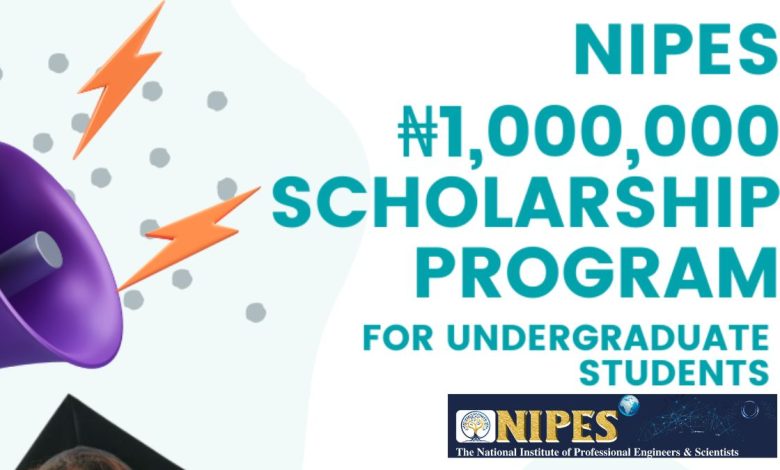
Apply for the NIPES Engineering and Science Scholarship 2026. ₦1M total funding for Nigerian STEM students. Deadline for application is April 30, 2026. Learn eligibility & how to apply.
NIPES Engineering and Science Scholarship 2026: Nigerian STEM Students (₦1 Million Award)
The National Institute of Professional Engineers and Scientists (NIPES) has opened applications for its prestigious ₦1,000,000 scholarship program designed to support aspiring engineers and scientists across Nigeria.
This comprehensive guide covers everything you need to know about the NIPES Engineering and Science Scholarship 2026, including eligibility requirements, application procedures, and expert tips to maximize your chances of success.
What is the NIPES Engineering and Science Scholarship?
The NIPES scholarship program totals ₦1,000,000 and will be distributed among five outstanding undergraduate students, with each recipient receiving ₦200,000. This initiative demonstrates NIPES’s commitment to fostering talent and promoting inclusivity in engineering and science fields globally.
The scholarship serves as more than just financial assistance. It represents an investment in Nigeria’s future technological and industrial advancement, supporting students who demonstrate intellectual potential, academic excellence, and a passion for innovation.
Scholarship Benefits
Winners of the NIPES Engineering and Science Scholarship 2026 will receive:
- Financial Award: ₦200,000 per student (five awards available)
- Free NIPES Student Membership: One-year complimentary membership for non-members
- Professional Recognition: Enhanced visibility within the Nigerian STEM community
- Mentorship Opportunities: Access to NIPES events and mentorship programs
- Academic Support: Funds can be used for tuition, research projects, laboratory materials, books, and essential academic expenses
- Career Development: Stronger credentials for future scholarship applications, research programs, and internships
- Networking Access: Connection with professionals in engineering and science fields
The scholarship is valid for the 2025/2026 academic year and represents a one-time award.
Eligibility Requirements
To qualify for the NIPES Engineering and Science Scholarship 2026, applicants must meet the following criteria:
Basic Requirements
Candidates must be currently enrolled in an accredited higher institution, studying science or engineering-related courses, and open to students in 100-level and above. This includes students from both universities and polytechnics across Nigeria.
Academic Programs Covered
The scholarship is open to students pursuing degrees in:
- All Engineering disciplines (Mechanical, Electrical, Civil, Chemical, Computer, etc.)
- Physical Sciences
- Computer Science and Information Technology
- Mathematics and Statistics
- Biological Sciences
- Environmental Sciences
- Technology and Applied Sciences
- Other STEM-related fields
Mandatory Course Requirement
All applicants must complete at least one free NIPES online course and explain the skills learned in their personal statement. This requirement ensures that candidates engage with NIPES educational resources and develop practical skills relevant to their field.
Priority Consideration
NIPES student members will be given priority in the selection process, while non-members are encouraged to join NIPES to enhance their chances of selection. Registering as a NIPES member is free for students and provides additional benefits beyond the scholarship application.
Application Process: Step-by-Step Guide
The application process consists of three main stages. Follow these steps carefully to ensure your application is complete:
Step 1: Register as a NIPES Student Member (If Not Already a Member)
Visit the NIPES website and create your student account. Registration is free and gives you priority consideration during the selection process. During registration, you’ll need to provide:
- Your full name and contact information
- Institution details
- Course of study
- Level of study
Read Also: LASU Registration Portal 2025/2026: How to Register Courses Online (Step-by-Step Guide)
Step 2: Complete a Free NIPES Online Course
Enroll in and complete at least one free online course offered by NIPES. These courses are specifically designed to develop practical skills in engineering and science. Upon completion, you’ll receive a certificate that must be referenced in your personal statement.
Available course topics typically include:
- Technical skills development
- Research methodologies
- Professional development in STEM
- Specialized engineering or science topics
- Innovation and problem-solving techniques
Take your time to choose a course that aligns with your academic interests and career goals, as you’ll need to write about the skills you gained.
Step 3: Submit Your Complete Application
Prepare and submit your application through the official NIPES portal. Your submission must include:
Personal Statement (500-750 words) covering:
- Your background and educational journey
- Your passion for engineering or science
- Academic and extracurricular achievements
- Challenges you’ve overcome
- Career goals and alignment with NIPES’s mission
- Detailed description of skills learned from the NIPES course and how they apply to your academic or career development
Required Documents:
- Proof of enrollment (admission letter or student status letter)
- Valid student ID card
- Academic transcripts or result slips
- NIPES course completion certificate
- NIPES membership number (if applicable)
Important Dates
Applications opened on December 15, 2025, with a deadline of April 30, 2026. Mark these dates on your calendar and plan to submit your application well before the deadline to avoid last-minute technical issues.
Timeline:
- Application Opens: December 15, 2025
- Application Deadline: April 30, 2026
- Selection Period: May – June 2026 (estimated)
- Announcement of Winners: To be announced
- Scholarship Award Period: 2025/2026 Academic Year
Selection Criteria
The NIPES scholarship selection committee evaluates applications based on several key factors:
- Academic Performance: Strong grades and consistent academic excellence
- NIPES Membership Status: Priority given to registered student members
- Personal Statement Quality: Clear, compelling, and well-written narrative
- Demonstrated Passion: Genuine enthusiasm for engineering or science
- Course Completion: Successful completion of NIPES online course with thoughtful reflection on learned skills
- Alignment with NIPES Values: Commitment to excellence, innovation, integrity, and collaboration
- Leadership and Extracurricular Activities: Evidence of well-rounded character
- Career Vision: Clear goals and potential for future impact in STEM fields
Tips to Strengthen Your Application
Craft a Compelling Personal Statement
Your personal statement is the heart of your application. Make it memorable by:
- Starting with a powerful opening that captures attention
- Being authentic and personal in your narrative
- Providing specific examples rather than generic statements
- Clearly connecting your experiences to your future goals
- Demonstrating how the NIPES course enhanced your skills
- Proofreading carefully for grammar and clarity
- Staying within the 500-750 word limit
Excel in Your NIPES Course
Take the required NIPES course seriously:
- Engage fully with course materials
- Complete all assignments and assessments
- Take detailed notes on what you learned
- Reflect on practical applications of the knowledge gained
- Connect course content to your academic program
- Save your completion certificate immediately
Gather Strong Documentation
Ensure all your supporting documents are:
- Current and valid
- Clear and legible (scan at high resolution)
- Properly labeled with your name
- In the required format (PDF is usually preferred)
- Organized logically for easy review
Join NIPES Early
Don’t wait until the last minute to register as a NIPES member. Early membership gives you:
- Priority consideration during selection
- Access to additional resources and events
- Time to familiarize yourself with the organization
- Networking opportunities with other members
Highlight Your Unique Value
Show the selection committee what sets you apart:
- Emphasize unique experiences or perspectives
- Discuss challenges you’ve overcome
- Showcase leadership roles or initiatives
- Mention relevant projects or research
- Demonstrate community involvement
About NIPES
The National Institute of Professional Engineers and Scientists is a prestigious research organization that bridges the gap between theoretical science and applied engineering.
NIPES promotes collaboration, knowledge sharing, and interdisciplinary research to drive innovation and technological advancement for Nigeria’s growth and development.
The organization’s core values include:
- Excellence in research and innovation
- Integrity and ethical practice
- Collaboration and knowledge sharing
- Diversity and inclusivity
- Commitment to national development
Through workshops, conferences, networking events, and scholarship programs like this one, NIPES provides a nurturing environment for professionals and students to thrive, exchange ideas, and push the boundaries of their respective fields.
Application Link
Ready to apply? Submit your application through the official NIPES scholarship portal: https://nipes.org/nipes-engineering-and-science-scholarship-2026/
For questions or assistance, contact NIPES at: [email protected]
Frequently Asked Questions (FAQs)
1. Can students from polytechnics apply for the NIPES scholarship?
Yes, the NIPES Engineering and Science Scholarship 2026 is open to students from both universities and polytechnics across Nigeria. As long as you’re enrolled in an accredited institution studying science or engineering-related courses at 100-level or above, you’re eligible to apply.
2. Is NIPES membership mandatory to apply for the scholarship?
No, NIPES membership is not mandatory, but it is highly recommended. While non-members can apply, NIPES student members receive priority consideration during the selection process. Membership is free for students and provides additional benefits such as access to resources, networking opportunities, and professional development programs.
3. How many NIPES online courses do I need to complete?
You are required to complete at least one free NIPES online course as part of your application. However, completing additional courses may strengthen your application by demonstrating greater commitment and allowing you to discuss a broader range of skills in your personal statement.
4. What should I include in my personal statement about the NIPES course?
Your personal statement should describe the specific skills you learned from the NIPES course and explain how these skills apply to your academic studies or career development. Be concrete and provide examples.
5. When will scholarship winners be announced?
While the exact announcement date has not been specified, winners are typically announced after the application deadline of April 30, 2026. The selection process may take several weeks as the committee reviews all applications carefully. Successful applicants will be contacted directly via email and may also be announced on the NIPES website and social media channels.
6. Can I apply for the scholarship if I’m in my final year (400 level or higher)?
Yes, students at all levels from 100-level to final year are eligible to apply. The scholarship is a one-time award for the 2025/2026 academic year, so even final-year students can benefit from the financial support for their remaining tuition, research projects, or academic expenses.
7. What happens if I’m selected but I’m not a NIPES member?
If you’re selected for the scholarship and you’re not already a NIPES member, you will receive a complimentary one-year NIPES student membership as part of your scholarship package. This membership provides access to NIPES events, mentorship programs, resources, and networking opportunities within the professional STEM community.
8. Can I use the scholarship money for expenses other than tuition?
Yes, the ₦200,000 scholarship award can be used for various academic expenses beyond tuition fees. This includes research projects, laboratory materials, textbooks and reference books, academic software or tools, conference attendance, and other educational costs that support your studies in engineering or science. The scholarship is designed to provide comprehensive support for your academic journey.
Conclusion
The NIPES Engineering and Science Scholarship 2026 represents an exceptional opportunity for Nigerian undergraduate students pursuing STEM degrees. With ₦1,000,000 in total funding distributed among five deserving students, this scholarship can significantly ease your financial burden while connecting you with a prestigious professional network.
The application process is straightforward but requires careful attention to detail, particularly in completing your NIPES online course and crafting a compelling personal statement. Start early, gather all required documents, and take time to create a thoughtful application that showcases your passion for engineering or science.
Apply now and join the next generation of Nigerian engineers and scientists making a difference in our nation’s technological advancement!
At least it you have not achieved anything so far as student, this should be an opportunity to get an offer.

On this platform, Anny shares reliable updates on career counselling, scholarships, and education editorials to help students and job seekers make informed decisions about their future. Her goal is simple: make career and education information clear, accessible, and trustworthy.